



|
Greenhouse Guide
| Supplies Guide | Grow
Light Guide | Cold Frame
Guide
|
Greenhouse
Supplies Guide
|
Ventilation | Heating
| Misting and Watering
Shading | Flooring | Benches
The Most Important Greenhouse Supply
What you may ask is the most important accessory you need to have for your
greenhouse. A heater? Proper ventilation? While these may be necessary to provide
the temperatures you want to maintain in the greenhouse, you are operating in
the blind if you do not have a min/max thermometer to show you what temperatures
your plants are experiencing in the greenhouse when you are not there. A min/max
thermometer records daily high and low temperatures in the greenhouse. This is
vital information that can tell you if your heating and/or cooling equipment is
sized correctly and working properly in your greenhouse. Some thermometers also
record highs and lows for humidity as well. This is a helpful feature for plants
that require specific humidity levels like orchids. View
greenhouse thermometers
Ventilation / Cooling

Ventilation
has two important purposes: providing fresh air, mainly carbon dioxide, to plants
and cooling for the greenhouse. Greenhouses are really designed to store heat
from the sun during the day creating a warmer temperature in the greenhouse versus
outside of it. This makes cooling a greenhouse on a hot day a difficult task that
can not be accomplished without a good ventilation system. Cooling in the summer
can be accomplished most easily with a combination of shade, proper ventilation,
and an evaporative cooling system like a misting system, fogger, or evaporative
cooler.Even using all of the items mentioned above you can expect
a greenhouse to still not be much cooler if any than the outside temperature in
hot humid areas.
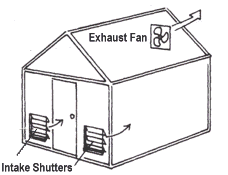 |
An exhaust
fan ventilation system usually consists of a fan setup to blow hot stale
air out of the greenhouse and bring fresh cooler air inside the greenhouse via
intake shutters mounted on the opposite end of the structure (Shown in picture).
An exhaust fan system should be able to make a complete change
of air in 1 to 3 minutes (about 1 minute or less for small greenhouses) in summer to keep
temperatures in the greenhouse at a reasonable level. If you aren't sure what
size fan or shutters you need, use our Fan & Shutter
Size Calculator. |
Many people use roof and/or side vents to supply fresh air to plants and
cool their greenhouse. This is ideal for venting during cold months, because if
used with automatic vent openers, fresh air
can be supplied to plants gradually reducing any "temperature shock"
to plants. HAF circulation fans are highly
recommended for use with side and/or roof mounted vent systems. The increased air movement helps to expel
hot air out of the window vents and provide fresh air for plants.
Unless you plan on staying in your greenhouse 24 hours a day 7 days a week, you
should consider automating your ventilation system. Forgetting to vent your greenhouse
one hot day could fry every plant in it. Thermostatic
controls and solar powered autovents will
also maintain a more consistent temperature in your greenhouse which promotes
healthier plant growth. In hot climates shading and misting equipment may be necessary
to hold the greenhouse's temperature in check. Winter ventilation needs are
lower. View ventilation supplies
Heating
The heating requirements of a greenhouse depend on the desired temperature for
the plants grown, the location and construction of the greenhouse, and the total
outside exposed area of the structure. Heating systems can be fueled by electricity, gas, oil, or wood.
The choice of a heating system and fuel depends on what is locally available,
the production requirements of the plants, cost, and individual choice. Heating
requirements for your greenhouse can be determined with our Heater
BTU Calculator.
If you're using your greenhouse to start seedlings and root cuttings in the
spring, supplemental heating probably will not be necessary. In mild climates,
12' x 12' and smaller model hobby greenhouses can be adequately heated with electric
heaters (make sure electric heaters are not exposed to water to avoid a dangerous
shock). An electric heater is clean, efficient, and easy to install and maintain.
Small gas heaters will also work well in
hobby greenhouses. With larger size greenhouses and cold climates where temperatures
regularly fall below freezing, larger gas greenhouse
heaters are most commonly used because it is cheaper to heat with gas than
electric in most areas. A highly recommended item for use with any greenhouse
heating system is a heat circulation fan.
They gently move the hotter air in the peak of the greenhouse to plant level helping
to maintain an even temperature in the greenhouse and increasing the efficiency
of your heating system.
View heaters
Misting
and Watering
Misting and fog systems have a variety
of uses in a greenhouse. It is important to determine what you want to accomplish
with a misting system before purchasing one. Humidity: It is important
to maintain a healthy humidity level (50% to 70%) in a greenhouse. Fog and Misting systems
with fine nozzles are very effective at providing additional humidity because
their smaller water particles evaporate more quickly. Evaporative Cooling:
Misting systems are a great low cost solution
to help cool greenhouses with a fine mist that lowers air temperatures when it
evaporates. Smaller nozzles work best for cooling also. An evaporative
cooler is the most effective cooling solution offered other than installing
an air conditioning system. It is a closed system that keeps water inside the
cooler and only exhausts the cooled air into the greenhouse. Watering:
Cuttings and seedlings are commonly watered with small overhead sprinkler or misting
systems or mist nozzles for hoses because watering with a regular wand or watering
can may disturb the surrounding soil causing plants to take longer to root. Drip systems are an effective way
to water larger plants without wetting the foliage. Another advantage to drip
systems is that they use very little water when compared to overhead watering
systems. View misting, sprinkler, and drip systems
Shading
Shade covers are the way professional growers
keep their greenhouses cool during those long hot summers. They block a percentage
of the sun's rays from entering the greenhouse which can reduce temperatures over
20% alone. Shade covers are relatively inexpensive and also provide shade for
plants that don't grow well in full sun. The amount of shading necessary
varies depending on greenhouse location, your local climate, and the light requirements
of the plants in the greenhouse. Most greenhouse shade cloths fall in the 45%
to 70% shade range. When buying a shade cover remember, more is not always better.
Excessive shading can slow plant growth and cause plants to stretch. View
shade covers
Flooring
The floor of your greenhouse is both functional and aesthetic. It forms the surface
you walk on and helps complete the image of the greenhouse. The walkway and the
area under the benches are usually two different materials. The walkway should
form a firm nonskid surface for walking, be easy to clean, and be durable enough
to withstand constant moisture and dirt. Common materials used for a walkway include
concrete, brick, stone, gravel, wood slats, and ground bark. The area under the
benches is usually covered by a porous material that can be dampened to help provide
humidity and should allow easy drainage of water. For under bench areas, consider
gravel, sawdust, ground bark, or any other porous material. You will want to lay
a sheet of woven weed barrier (ground
cover) under the floor covering to prevent weed growth, because weeds harbor
many pests and diseases. For more information, take a look at our guide
on building a foundation and floor.
Benches
You will want benches in your greenhouse.
They make a world of difference in the ease of gardening and add a lot of extra
working space to your greenhouse. Benches also provide the area under them with
plenty of shade which is an ideal environment for many plants. Greenhouse bench
tops should have an open design which allows water to drain and fresh air to flow
through them. View benches
Greenhouse Buying Guide
>
Greenhouses | Greenhouse
Accessories | Resource
Center
Ordering and Shipping Information
ACF Greenhouses
380 Greenhouse Drive
Buffalo Junction, VA 24529
434-374-2706 Phone, 434-374-2055 Fax
888-888-9050 Toll Free
Copyright Aarons Creek Farms, Inc. All Rights Reserved.
|